What is 'Safe to Spend'? The Budgeting Number That Actually Works
One number replaces your entire budget. 'Safe to Spend' calculates exactly what you can spend today without missing a bill. Here's how it works.
Weekly insights on saving, spending, and making your money work harder. No spam.
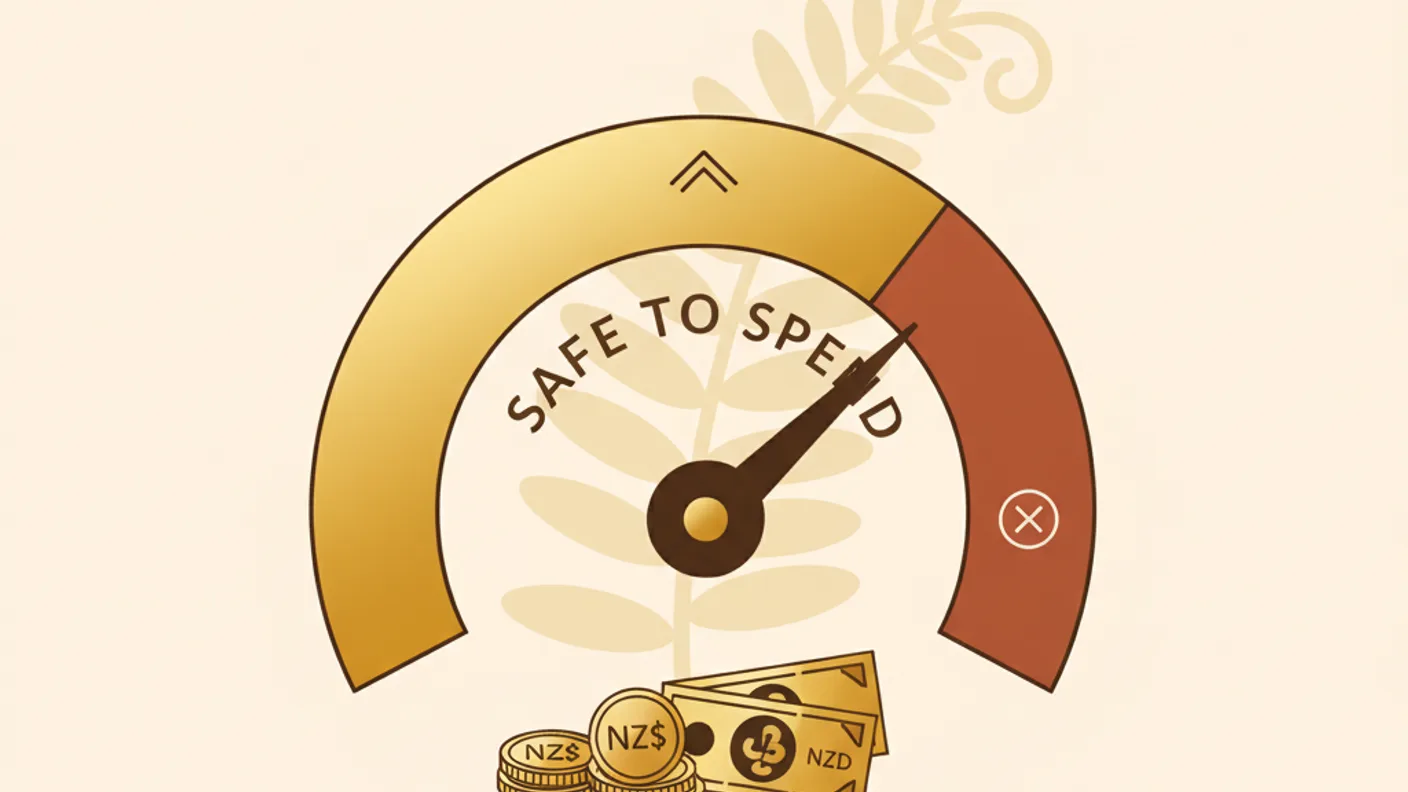
Traditional budgeting asks you to categorise every dollar. Safe to Spend gives you one number — the amount you can freely spend this week without missing bills, goals, or savings targets. It's the core of how to budget as a beginner in NZ.
How Safe to Spend works
The formula is simple:
Income - Fixed Costs - Goal Contributions - Bills Due = Safe to Spend
Example:
- Monthly income: $4,500
- Fixed costs (rent, power, insurance): $2,800
- Goal contributions (holiday fund, emergency): $300
- Remaining: $1,400
- Weekly Safe to Spend: $350
That $350 is your freedom number. Groceries, coffee, petrol, dinner — as long as your weekly spending stays under $350, everything else is taken care of.
Why it works better than traditional budgets
One number vs twenty categories. You don't need to track groceries separately from dining separately from entertainment. One number covers all discretionary spending. This is why finance apps beat spreadsheets for most people.
Real-time feedback. Your Safe to Spend updates as you spend. Bought $80 of groceries? Your number drops to $270 for the rest of the week. No logging, no calculations.
No guilt categories. Traditional budgets make you feel bad for spending $30 on lunch. With Safe to Spend, if you're under your number, you're winning — regardless of what you spent it on.
The psychological advantage
Budget categories create decision fatigue. Every purchase requires a mental calculation: "Is this groceries or dining? Am I over my coffee budget?"
Safe to Spend eliminates this. The only question is: "Is this under my number?" Yes → go for it. No → maybe wait until next week. Learn more about the money habits that actually stick.
How to set it up
- Calculate your monthly fixed costs. Everything that auto-pays: rent, power, insurance, subscriptions, loan repayments.
- Set aside savings/goals. Decide what you want to save monthly and treat it as a fixed cost. Need help? See our guide on setting financial goals that work.
- Subtract both from income. The remainder is your monthly discretionary amount.
- Divide by 4. That's your weekly Safe to Spend.
Or use an app like Steady that calculates it automatically from your bank transactions — it knows your income, fixed costs, and goals, and updates your number in real time.
The one rule
If your Safe to Spend is consistently negative or uncomfortably low, you have a structural problem — not a willpower problem. The fix is either increasing income or reducing fixed costs, not "trying harder" to spend less on groceries.
Written by Sam Wilson
Founder, Steady
Sam is a New Zealand founder building Steady — a personal finance app designed for Kiwis, integrated with every major NZ bank via Akahu. He writes about money, bank integrations, and what actually works for everyday New Zealanders.More about Sam
Suggested reads
More from the Steady blog

Why Checking Your Money for 2 Minutes a Day Actually Works
The science behind why a quick daily money check-in beats a monthly budget review — and how to build the habit without it feeling like a chore.
How to Start Budgeting in NZ: Beginner's Guide (2026)
Forget spreadsheets. This 10-minute guide gets you a working budget that actually fits NZ pay cycles — fortnightly or weekly. Free template inside.
How to Track Spending Automatically in NZ (2026 Guide)
Still entering transactions by hand? Here's how to connect your NZ bank and track every dollar automatically — setup takes 2 minutes.
Ready to sort your money?
Steady connects to your NZ bank accounts and helps you track spending, set goals, and get AI-powered insights.
Try Steady free