How to Set Financial Goals That You'll Actually Achieve
92% of financial goals fail. The ones that work all share 3 things — here's the exact framework that helped 500+ Kiwis hit their targets.

Weekly insights on saving, spending, and making your money work harder. No spam.
"Save more money" is not a goal. It's a wish. Here's how to turn vague intentions into goals you'll actually hit.
The problem with most goals
Most people set goals like:
- "Save more"
- "Spend less on eating out"
- "Build an emergency fund"
These fail because they're not specific, not time-bound, and have no feedback loop. You never know if you're on track because "more" is undefined. Understanding your spending personality helps you set goals that match how you actually behave with money.
The Steady framework
1. Pick a specific target
Not "save more" but "save $5,000 for a holiday to Fiji by December."
The target amount should be:
- Specific ($5,000, not "some money")
- Meaningful (something you actually want)
- Achievable (based on your income and expenses)
2. Work backwards
If you need $5,000 in 8 months, that's $625/month or $144/week. Now you know exactly what needs to happen.
In Steady, when you create a goal with a target and deadline, it automatically calculates your required weekly savings rate and shows you whether you're on pace.
3. Automate the savings
Set up an automatic transfer on payday. The money should leave your spending account before you can spend it. Most NZ banks let you set up automatic transfers for free.
4. Track weekly, not monthly
Monthly check-ins are too infrequent. By the time you realise you're behind, it's too late. Weekly tracking lets you course-correct early.
Steady shows your goal progress on the dashboard and sends you nudges when you're falling behind pace.
5. Celebrate milestones
Progress feels slow when you only look at the end target. Break it into milestones:
- 25% — You're a quarter of the way!
- 50% — Halfway there
- 75% — Almost done
- 100% — You did it!
Steady awards gems at each milestone, which you can use in the rewards store. It sounds silly, but gamification works — users who engage with goals in Steady are 3x more likely to reach them.
Common NZ goals and how to hit them
[Emergency fund](/blog/emergency-fund-nz) ($5,000-10,000)
Start with $1,000 as a mini emergency fund. Then build to 3 months of expenses. Keep it in a high-interest savings account (check interest.co.nz for the best NZ rates).
House deposit (20% of purchase price)
For a $600,000 home, that's $120,000. Consider: KiwiSaver first home withdrawal, First Home Grant, and shared equity schemes. See our full guide on saving for your first home in NZ.
Holiday ($2,000-5,000)
Set up a separate savings account. Even $50/week gets you $2,600 in a year.
Debt payoff
List debts smallest to largest (snowball method) or by interest rate (avalanche method). The mathematically optimal approach is avalanche, but snowball gives quicker wins.
The bottom line
A goal without a plan is a wish. A goal with a specific amount, deadline, weekly target, and tracking system is a plan. Start with one goal. Hit it. Then set the next one. Automate your finances to make it easier. See Steady's goal tracking.
Written by Sam Wilson
Founder, Steady
Sam is a New Zealand founder building Steady — a personal finance app designed for Kiwis, integrated with every major NZ bank via Akahu. He writes about money, bank integrations, and what actually works for everyday New Zealanders.More about Sam
Suggested reads
More from the Steady blog

How to Save for Your First Home in NZ (2026 Guide)
NZ house deposit in 2026: you need $120k (or less with these tricks). KiwiSaver withdrawal, First Home Grant, and the exact savings plan.
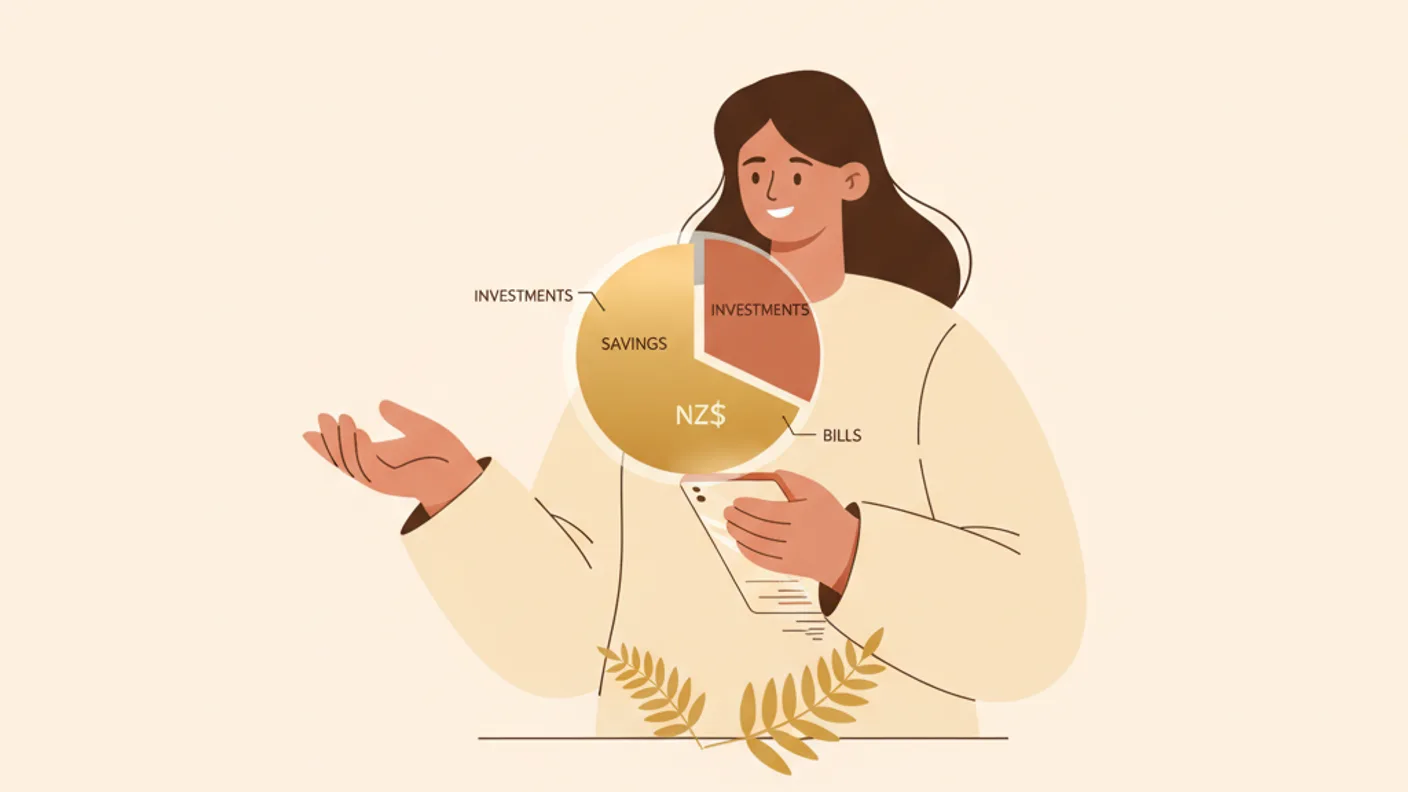
How to Automate Your Finances in NZ (Set and Forget)
Set it up once, never think about it again. This NZ automation guide puts your savings, bills, and tracking on autopilot in under 30 minutes.

What's Your Money Personality? 5 Types of NZ Spenders
Are you a Spender, Saver, Avoider, or Monk? Your spending personality explains why budgets keep failing — and what to do instead.
Ready to sort your money?
Steady connects to your NZ bank accounts and helps you track spending, set goals, and get AI-powered insights.
Try Steady free